субота, 12. јул 2014.

Beauty icons of the past-Marlene Dietrich

Marlene Dietrich 


Marlene Dietrich on a barrel, with legs seductively crossed, as passionate and dangerous Lola-Lola from the movie Blue Angel, based on a novel Professor Unrat by Heinrich Mann, became an iconic scene in film history, so many times duplicated in the future. What this movie created was an all-time  screen goddess, very much different from the cultural atmosphere which was to take place in post WW II world. In fact, she belonged to an era of a true sexual revolution, a movement that is so often contributed to the wild 60s, although it's truest and purest form was in the time of Marlene Dietrich.


So, what does this exactly mean? Movie legends that dominated the silver screen in the  very experimental 20s were of unique qualities and sensibility, never truly seen again in history. One of those, besides the fact that they were all women from Northern Europe (this is the period of the rise of the theory of dominating races), was a bisexual sensibility. These women were slightly or full-on androgynous in their also often cold appearances, which didn't stop them to be the first on film femme fatales.
Marlene Dietrich was a  picture of an independent, smart and, with that, extremely sexy woman in this pre WW II era, a true female idol, with strong political believes, that could take on any man, especially when she was wearing a male tuxedo :). 


четвртак, 27. фебруар 2014.

Marron's health & beauty routine Vol.2

Now, the beauty routine. Yay, I have been wanting to do this since we started the blog.
  •  First and most important: For me, less is definitely more
  • I try to use natural products as much as I can, because they are excellent for the skin, but can be very expensive
  • Happy woman is a beautiful woman
Face:
As a cleanser, when I am breaking, I use a natural, ayuverdic soap called Neem Guard Haldi Chandan Soap, which does not dry my skin. It smells like herbs and it does the work. When my skin is clear, I just use some miccelar water, like Avene's or Bioderma Crealine. A few times, due to some hormonal dis-balance, I had bigger problems, and Effeclar products by LRP helped a lot.


As a moisturizer I use Weleda Iris Hydrating Facial Lotion, for combination skin

I strongly believe in face-masks, mainly made of clay, like a Serbian Biomaska or an ayverdic one called, Gayatri
I love make-up, but I do not overdo it:
  •  Maybelline BB cream, the lightest one, made for combination skin
  • Rimmel liquid blush Stay Blushed  in shades 01 and 03
  • Artdeco eyeshadows
  • Mascara by an Italian brand called Kiko
  •  Rouge Coco by Chanel in shades 01 and 05

Marron's health & beauty routine Vol.1


Hi, guys. So, today I am going to share with you some tips on how I am improving my health and looks with hope it with help you too. When I was 15, I was diagnosed with Hashimoto's thyroiditis, an autoimmune disease, which goes along with a long list of health problems, from migraines, bad circulation, to tachycardia, depression, acne. My disease is in control right now, because of the hormones I use, but I strongly believe that my life style has a lot to do with it. So, here we go...


  • Exercise as much as you can: it will do wonders to your blood pressure ( ! I have a low blood pressure! Consult a doctor if you have it high!) + through sweat you get rid of the toxins.I do it 4,5 times a week and I usually dance salsa.
    Marron and her boyfriend dancing salsa
  • Drink a lot of water. Water makes 75% of our body.  It's helps in clearing it from the  toxins, as well, and it's keeps your skin hydrated, so I suggest 2-3 l a day. I drink Aqua Viva, a superb Serbian mineral water. Green tea is also very good as well as so-called roibos tea.
  • Eat healthy. This means: no fast food, no soda, no sweets and get easy with red meat, dairy and gluten rich products. Instead, eat a lot of fresh vegetables and fruits and try cooking by yourself without using the oil. Now, thank God, I am not into sweets and fast food, since my mother has always cooked pretty healthy, but I am so, so into gluten, so I am trying to improve myself in that way, but it is very hard, cause in Belgrade we have a bakery on every corner. Plus, I don not believe in cutting all of the above from your diet, because I love to eat, but just try to do it as healthy as you can without falling into depression, ok? :) An advice for sweets-junkies: try honey, it's a lot healthier.
  • Keep away from the stress as much as you can. Stress will make any health problem worse. I know that it is very hard to do, so I suggest this: Do not get nervous about the things you can not change, surround yourself with positive people and animals, walk, laugh and make love as much as you are able to :)
    Meeko, a sure cure from the depression

  • In addition to the upper advice, brace the nature and stay away as much as you can from ( I know, I am not trying to be sarcastic) TV, computers, self-phones, etc.
  • My mom is a doctor, so this is a fact: regular checks of your health condition are very important.

среда, 26. фебруар 2014.

Tuesday's Dream Place to Visit

Recently, Egypt has become one of the top destinations to visit during summer vacations, here in Serbia. Unfortunately, we haven't had  the chance yet. Marron's been reading a book about Nefertiti (hey, here's material for future post), and that's what inspired us to take you to Egypt this time.


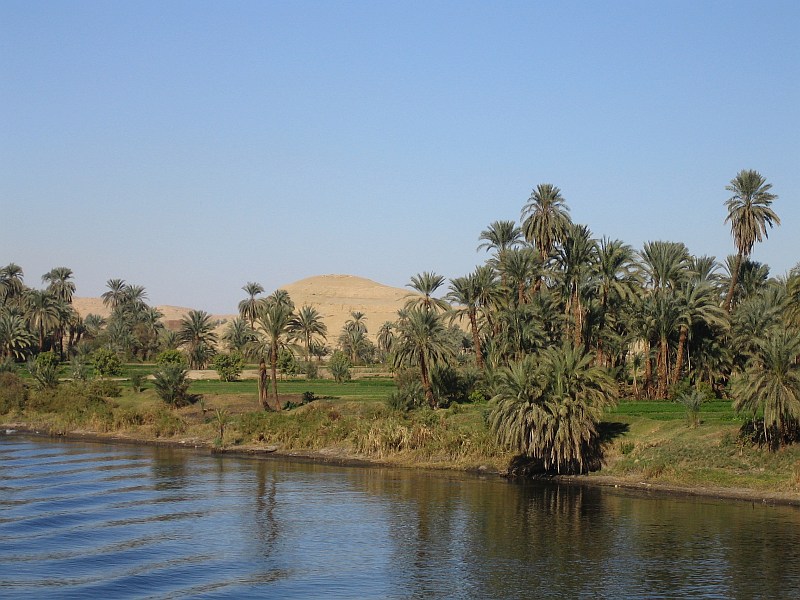
- Nile

photo by Ian Sewell

  The longest river in the world and  life source for one of the ancient civilizations, Nile is definitely a sight to explore. Cruising it will help you see far more than you would by foot or car, and the boats stop at many famous sights.

- The Valley of the Kings

photo by Nikater

The Valley of the Gates of the Kings, is a valley where tombs were constructed for the Pharaohs and powerful nobles of the New Kingdom, for nearly 500 years (from 16th to 11th century BC). It's located opposite Thebes (modern Luxor), and in 1979, it became a World Heritage Site, along with the rest of the Theban Necropolis. 

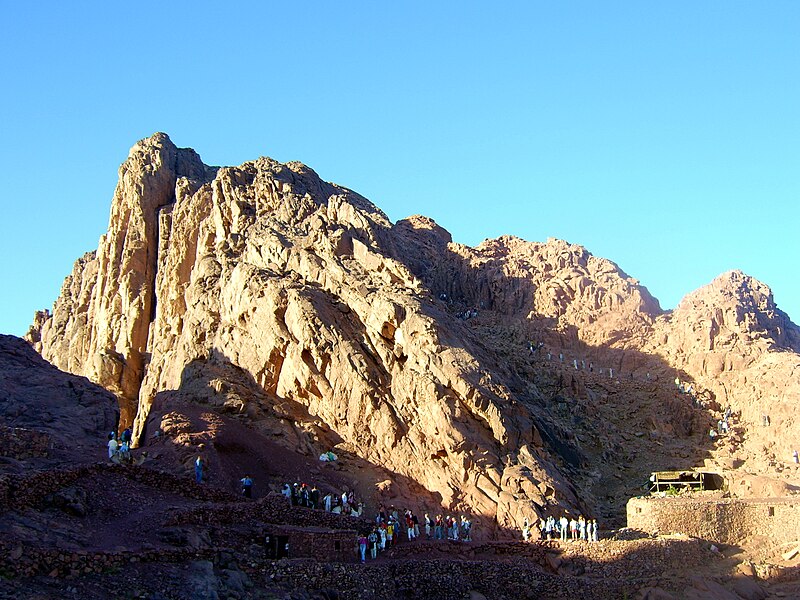
- Mount Sinai and Saint Catherine's Monastery

photo by  Tamerlan

picture by Berthold Werner

  Mount Sinai is a mountain in the Sinai Peninsula of Egypt, and it's a possible location of the biblical Mount Sinai, where Moses received the Ten Commandments.  At the foot of the mountain is the Saint Catherine's Monastery, commonly known as Santa Katarina, Greek Orthodox monastery, which houses irreplaceable works of art: mosaics, some of the best collection of early icons, as well as liturgical objects. It's one of the oldestworking Christian monasteries in the world, and UNESCO World Heritage Site.

- The Great Sphinx of Giza


The Great Sphinx of Giza, the largest monolith statue in the world (73,5 m long, 19,3 m wide, and 20.22 m high) is the oldest known monumental sculpture, and it's commonly believed to have been built by ancient Egyptians of the Old Kingdom, during the reign of Pharaoh Khafra. The Sphinx is a mythical creature with a lion's body and a human head (generally believed it represents the face of Pharaoh Khafra) and it stands on the Giza Platou on the west bank of the Nile in Giza. The nose is missing, and there's the story that the nose was broken off by a cannonball fired by Napoleon's soldiers. Some sketches from 1738, show the Sphinx missing its nose. In addition to the lost nose, it's thought that the sphinx also had a ceremonial pharaonic beard,  although it may have been added in the later periods. 

 - The Egyptian Museum
 

photo by bjornfree 

 The Museum of Egyptian Antiquities, is home to an extensive collection of ancient Egyptian antiquities, with around 120 000 items. It has many treasures of King Tutankhamun, including the shown Gold Mask, composed of 11 kg of solid gold. It rested over the bandages wrapped around his face, and it's believed it represents what he truly looked like. Unlike many others, his tomb was found mostly intact, but even though it held over 3500 artifacts, there had been at least two robberies of the tomb, perhaps soon after Tutankhamun's burial.

Beauty Icons of The Past


 Greta Garbo

The magnificent Garbo, born in Sweden as Greta Gustafsson, was one a few true icons of The Golden Age of Hollywood. She graced the silver screen through it's silent and classic period and 13 years after her last film was named the most beautiful woman who ever lived by The Guinness Book of World Records. Her enchanting mysterious eyes with naturally very long lashes, at the same time strong and subtle face features with flawless skin, usually covered with Max Factor products, paired with deep voice and expressive body language gave her a stunning, unforgettable screen presence. Her look, marked with arched pencil-drawn eyebrows and thin lips, does not represent the beauty ideal of the 21 century, indeed, but she may be one of the first public personas to prove how important is charisma and originality in becoming a movie star and beauty icon, which back then, basically meant the same thing.


недеља, 23. фебруар 2014.

Wisdom of the Day


 "I don't care that they stole my idea. I care that they don't have any of their own."

Nikola Tesla

уторак, 18. фебруар 2014.

Tuesday's Dream Place to Visit


We think it's safe to say that one of our biggest dreams is to travel the world. We've been to a few nearby places, and never outside Europe; we're still hopeful that that fact will change soon (anyone feeling generous? contact us, pls :P)

 Japan's been on our "to-do" list (especially Margarite's) for a while now, as it's a wonderful combination of tradition and modernity that we appreciate. From skyscrapers, colourful shops and clubs, to temples, peaceful gardens and traditional houses. Take a look yourselves:

~ Koishikawa Kourakuen Garden


One of Tokyo's oldest and well known gardens, frequented a lot by tourists. Even though it's beautiful throughout the year, it's especially so during the fall, with rich vibrant red and orange colours. It's also interesting to see during plum and cherry blossom season.

~ Tokyo Imperial Palace Koishikawa Kourakuen Garden


Main residence of the imperial family, a large park-like location, with several buildings, including main palace, private residences, archive, museum and administrative offices. Visitors are able to enter the inner palace grounds on two occasions: January 2nd (New Year's Greeting) and December 23rd (Emperor's Birthday).

~ Shibuya

picture by  Guwashi

  Shibuya was historically the site of a castle of the Shibuya family from 11th century through the Edo period. In 1882, Aoyama Gakuin University was founded, and with opening of the Yamanote Line in 1885, Shibuya begin to emerge as a railway terminal for southwestern Tokyo and eventually as a major commercial and entertainment center. There are many famous fashion department stores, and probably the most famous major shopping centar near Shibuya Station is Shibuya 109. 

~ Meiji Shrine

 
A Shinto shrine,  located in Shibuya, is dedicated to the deified spirits of Emperor Meiji and his wife Empress Shouken. It was officially completed in 1926, on a location of an iris garden, frequented by the Emperor and the Empress. Unfortunately, it was destroyed in the World War II, and the present iteration of the shrine was funded through a public fund raising effort and completed in October, 1958. The area is covered by an evergreen forest that consists of 120,000 trees of 365 different species, which were donated by people from all parts of Japan when the shrine was established.

~ Yoyogi Park


One of the largest Tokyo city parks, adjoined to Shibuya Station and Meiji Shrine. It's on a site where the first successful powered aircraft flight in Japan took place by Captain Yoshitoshi Tokugawa on 19. December 1910. It's very busy in springtime, when people visit it to enjoy cherry blossoms during hanami.

~ Roppongi Hills

picture by Chris 73

Roppongi Hills is basically a city within a city. It's a new urban center of the Roppongi district, constructed by Minoru Mori, and it's opened in 2003. It features offices, apartments, shops, restaurants, a hotel, art museum, observation deck and more. The office floors are home to leading companies from the IT and financial sectors, and it could be said that Roppongi Hills have become a symbol of the Japanese IT industry. At the center stands 54-storey Mori Tower, one of the largest building in the city.

~ Harajuku

picture by TokyoFashion

Harajuku mostly refers to the area around Tokyo's Harajuku Station, located between Shinjuku and Shibuya. It's the center of Japan's teenage culture and fashion styles, with lots of shops and some historic sights.

~ Tokyo Disneyland


  Seriously, does it need any explanation?

You may noticed this post was basically about Tokyo, and that's by no means the only thing to see in Japan. So guess what? Stay tuned for more. Mata ne!